Pallet rack is the backbone of most warehouse and distribution operations, but not all pallet rack systems are the same. The type of rack you choose has a direct impact on storage density, inventory accessibility, forklift requirements, aisle configuration, and the total cost of your storage system. Selecting the wrong rack type for your operation creates inefficiencies that are expensive to correct after installation.
This guide covers the primary pallet rack system types used in warehouse and industrial environments, how each one works, and the operational conditions each is best suited to — so you can make an informed decision before specifying a system.
What to Consider Before Choosing a Pallet Rack System
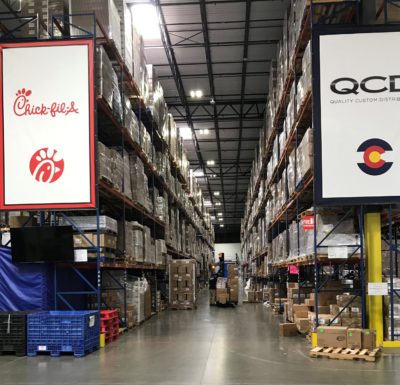
Floor to ceiling standard pallet racks in a warehouse
Before evaluating specific rack types, it is worth establishing the criteria that will drive the decision. The most important variables are:
Inventory profile: how many distinct SKUs you manage and what turnover rate each SKU has. A large SKU count with varied demand patterns favors selectivity. A small SKU count with high volume of each favors density.
Inventory rotation requirements: whether your operation requires first-in, first-out (FIFO) rotation, such as food distribution or pharmaceuticals, or whether last-in, first-out (LIFO) or random access is acceptable.
Storage density goals: the ratio of usable pallet positions to total floor space consumed, including aisle space. Higher density systems sacrifice individual pallet accessibility for more positions per square foot.
Forklift type and operating width: some rack systems require reach trucks, double-reach forklifts, or narrow-aisle equipment. If your facility is already equipped with counterbalance forklifts, a system requiring specialized lift equipment adds capital cost.
Ceiling height: vertical height determines how many beam levels are achievable and directly affects the total pallet positions a given footprint can hold.
With those variables established, the following rack types can be evaluated against your specific requirements.
Selective Pallet Rack
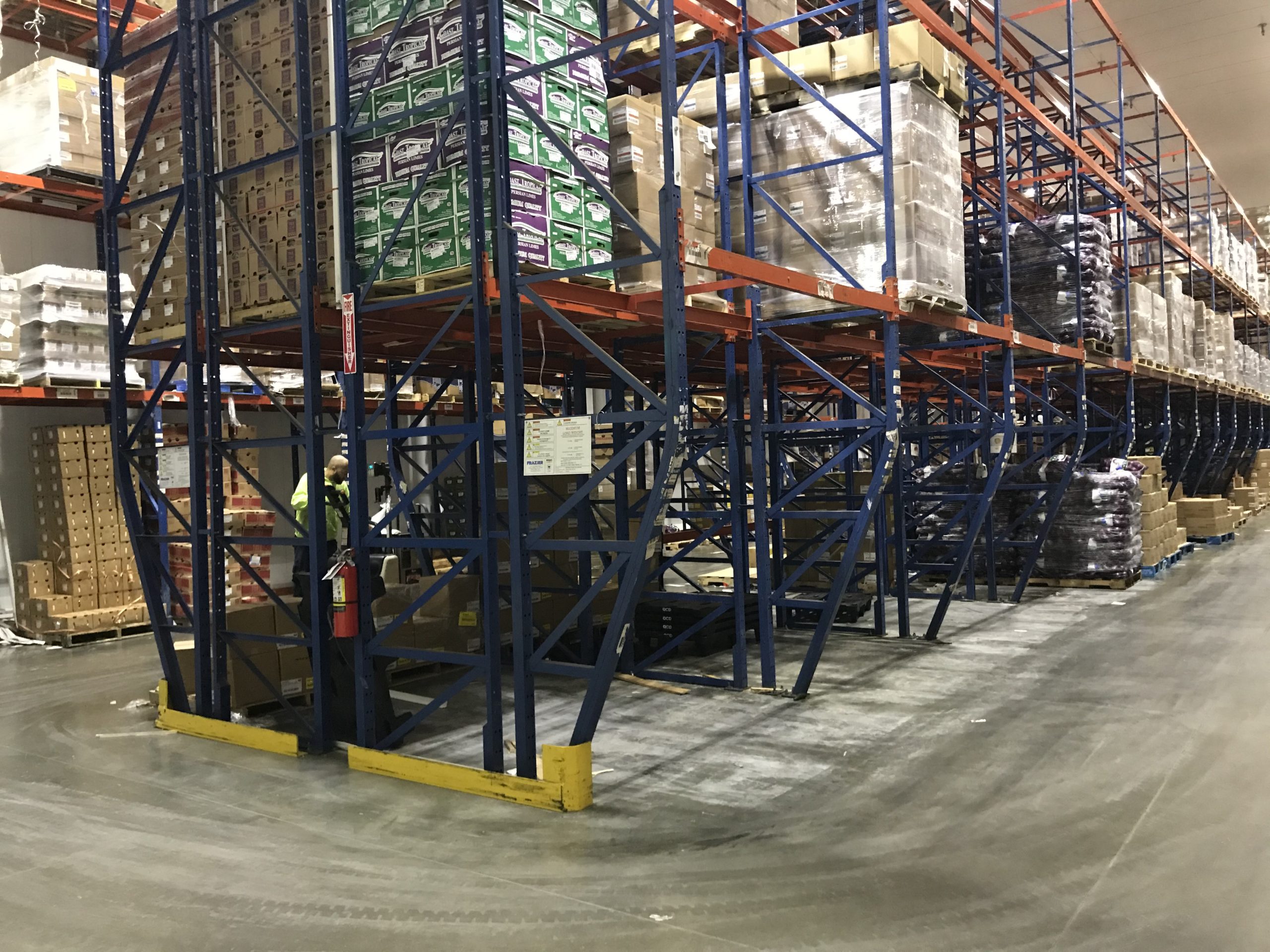
Selective Pallet Racks
Selective pallet rack is the most widely used pallet rack configuration in warehouse environments. Every pallet position in a selective system is directly accessible from the aisle without moving any other pallet, which maximizes operational flexibility and picking speed.
Selective rack consists of upright frames and horizontal beams arranged to create individual storage bays. It is available in roll-formed and structural steel versions, is compatible with standard counterbalance forklifts, and can be configured in single-deep or double-deep arrangements depending on density requirements.
The tradeoff for accessibility is aisle space. Selective rack requires a dedicated aisle for every rack row, which limits storage density relative to deeper storage systems. For operations managing a large number of SKUs with varied demand, the flexibility advantage typically outweighs the density limitation.
Selective pallet rack is the right choice for most general warehouse, distribution, and manufacturing storage applications, particularly those with high SKU counts or frequent inventory rotation requirements.
Drive-In and Drive-Through Rack
Drive-in rack is a high-density storage system designed for facilities storing large quantities of a small number of SKUs where individual pallet accessibility is not a priority. Rather than accessing pallets from an aisle, forklifts drive directly into the rack lane to load and retrieve pallets from rails inside the structure.
In a drive-in configuration, loading and retrieval both occur from the same end of the rack lane, which means the last pallet loaded must be the first retrieved, a last-in, first-out (LIFO) inventory sequence. Drive-through rack adds a second entry point at the opposite end of the lane, enabling first-in, first-out (FIFO) rotation by loading from one end and retrieving from the other.
Drive-in systems eliminate the aisle space required between rack rows, significantly increasing the number of pallet positions per square foot compared to selective rack. The density advantage is substantial, but it comes at the cost of selectivity — accessing a specific pallet deep in a lane requires removing all pallets in front of it first.
Drive-in rack is best suited to cold storage and freezer applications where maximizing storage density within expensive refrigerated space is the primary objective, and to operations storing large volumes of a single product such as seasonal goods, overstock, or bulk raw materials.
Pallet Flow Rack
Pallet flow rack is a gravity-fed, first-in, first-out storage system. Pallets are loaded at the rear of the rack lane and travel forward on inclined conveyor rollers to the retrieval position at the front. As a pallet is removed from the front, the pallet behind it flows forward to take its place.
Because loading and retrieval occur at opposite ends of the rack lane, forklift traffic is separated, load forklifts work at the rear while pick forklifts work at the front. This separation improves operational safety and efficiency in high-throughput environments.
Pallet flow rack provides high storage density similar to drive-in systems while maintaining FIFO rotation, which is a requirement in food distribution, beverage, pharmaceutical, and any application involving perishable or date-sensitive inventory. It is also effective for high-volume operations where a small number of SKUs turn over rapidly.
The conveyor roller systems require regular maintenance to ensure consistent flow performance, and lane configuration must account for pallet weight and size to ensure proper travel speed.
Push-Back Rack
Push-back rack is a high-density storage system that shares some characteristics with pallet flow rack but operates on a different mechanical principle. Rather than gravity-fed rollers, push-back systems use nested carts on inclined rails. When a pallet is loaded, it pushes the existing pallet or cart behind it back into the lane. When a pallet is retrieved from the front, the carts behind it roll forward under gravity to present the next pallet.
Unlike pallet flow systems, both loading and retrieval in a push-back system occur from the same end of the lane, which means inventory follows a last-in, first-out sequence. Push-back systems typically accommodate two to five pallets deep per lane, offering a middle ground between the selectivity of selective rack and the density of drive-in systems.
Push-back rack is well suited to operations with a moderate number of SKUs, high volume per SKU, and a preference for dense storage without the strict FIFO requirement that drives pallet flow adoption. It is a common choice in grocery distribution, manufacturing raw material storage, and cold storage environments where density and reasonable accessibility are both priorities.
Double-Deep Rack
Double-deep rack is a variation of selective rack where bays are configured two pallet positions deep rather than one. This doubles the storage depth of each rack position, increasing storage density significantly while retaining more accessibility than drive-in or push-back systems.
The requirement for double-deep rack is a reach forklift capable of extending its forks to the depth needed to place and retrieve the rear pallet position. Standard counterbalance forklifts cannot reach the second position without a double-reach attachment.
Double-deep systems maintain LIFO inventory sequencing within each deep position — the front pallet must be removed to access the rear pallet, but aisle configuration remains similar to selective rack, with dedicated aisles serving each row face. This makes double-deep rack a practical option for facilities looking to increase density modestly without transitioning to a fully dedicated deep-lane system.
Cantilever Rack
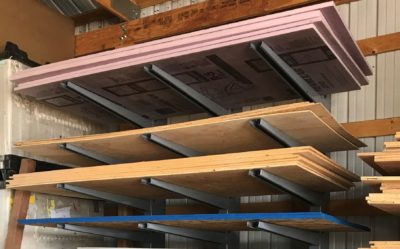
Cantilever Racks holding wood slabs
Cantilever rack is a fundamentally different structural design from the beam-and-upright systems described above. Rather than enclosed bays with front faces, cantilever rack uses arms extending horizontally from vertical columns, creating open storage bays with no front obstruction. This makes cantilever systems the correct choice for storing long, flat, or irregularly shaped materials that cannot be efficiently stored in standard pallet rack.
Typical applications for cantilever rack include lumber yards storing dimensional lumber and sheet goods, steel service centers storing bar stock, pipe, and structural steel, furniture distribution handling long flat-packed products, and manufacturing facilities storing raw stock in lengths that exceed standard pallet rack bay widths.
Cantilever systems are available in single-sided and double-sided configurations. Double-sided cantilever allows access from both sides of the rack row, maximizing storage density. Column height, arm length, and arm capacity are selected based on the specific product being stored.
Structural Pallet Rack
Structural pallet rack is fabricated from hot-rolled structural steel angles and channel members rather than the cold-rolled, roll-formed steel used in standard rack systems. The result is a significantly more robust structure with greater resistance to forklift impact damage and higher load capacities per bay.
Connections in structural rack systems are bolted rather than the clip-in connections used in roll-formed rack, which provides additional rigidity and makes the system easier to repair in sections if impact damage occurs. Damaged components can be replaced without removing the entire upright or bay.
Structural rack is specified for applications where heavy loads, exposure to frequent forklift impact, or extreme environmental conditions exceed the performance envelope of standard roll-formed systems. Food distribution cold storage, freezer storage, industrial manufacturing, and high-bay distribution centers with dense forklift traffic are common structural rack applications.
Hybrid Rack
Hybrid rack combines structural steel uprights with roll-formed beam components, capturing the impact resistance and durability of structural steel at the upright level while retaining the flexibility and accessory compatibility of roll-formed beams. This is a practical configuration for operations that experience frequent forklift contact with uprights, the most commonly damaged component, while benefiting from the wider range of beam accessories available for roll-formed systems.
Rack-Supported Structures
In large-scale, purpose-built distribution centers and cold storage facilities, pallet rack can serve a dual role as both the storage system and the structural framework of the building itself. In a rack-supported structure, the rack uprights carry the building’s roof and wall loads in addition to the inventory loads, eliminating the need for a separate building structural system.
This approach is most common in automated high-bay storage facilities and large cold storage installations where minimizing building cost per pallet position is a primary design objective. The rack system and building design must be engineered together from the outset, and the approach is not applicable to existing facilities.
Choosing the Right Pallet Rack System for Your Warehouse
The right rack system for your operation is determined by the intersection of your inventory profile, density requirements, forklift equipment, rotation requirements, and budget. Very few operations benefit from a single rack type applied uniformly. Most well-designed warehouses use a combination of rack configurations tailored to different inventory zones and operational functions.
WSH designs pallet rack systems for warehouses, distribution centers, cold storage facilities, and industrial operations throughout Colorado, Eastern Wyoming, and Western Nebraska. We use AutoCAD layout software to design rack configurations that optimize your specific facility’s storage capacity and workflow before any materials are ordered, giving you a clear picture of the solution before the project begins.
Request a Proposal to start designing the right pallet rack system for your operation.