
Warehouse fire protection is not a single product or a checkbox — it is an engineered system that must account for the specific commodities being stored, the configuration of your racking, local fire codes, and the requirements of your insurance carrier. For operations storing flammable liquids, aerosols, cooking oils, chemicals, or other regulated materials in pallet rack systems, fire protection components are not optional. They are a core part of how the rack system is designed and installed.
This guide covers the primary fire protection components used in pallet rack systems, how they work together, and what warehouse operators need to understand before specifying or upgrading a racking installation.
Why Pallet Rack Fire Protection Is More Complex Than Ceiling Sprinklers
Traditional warehouse fire suppression relies on ceiling-mounted sprinkler heads that activate when heat rises to a threshold temperature. In a standard open warehouse, this approach provides adequate coverage. In a high-density pallet rack environment, it often does not.
The problem is vertical storage density. When inventory is stacked multiple levels high in pallet rack bays, a fire starting at lower levels can spread rapidly through tightly packed product before ceiling sprinklers ever activate. The heat and smoke must travel upward through the rack structure before triggering the system, which can allow significant damage to occur before suppression begins.
In-rack fire protection solves this by positioning sprinkler heads and heat management components at multiple levels within the rack structure itself, providing faster activation and more targeted suppression closer to the source.
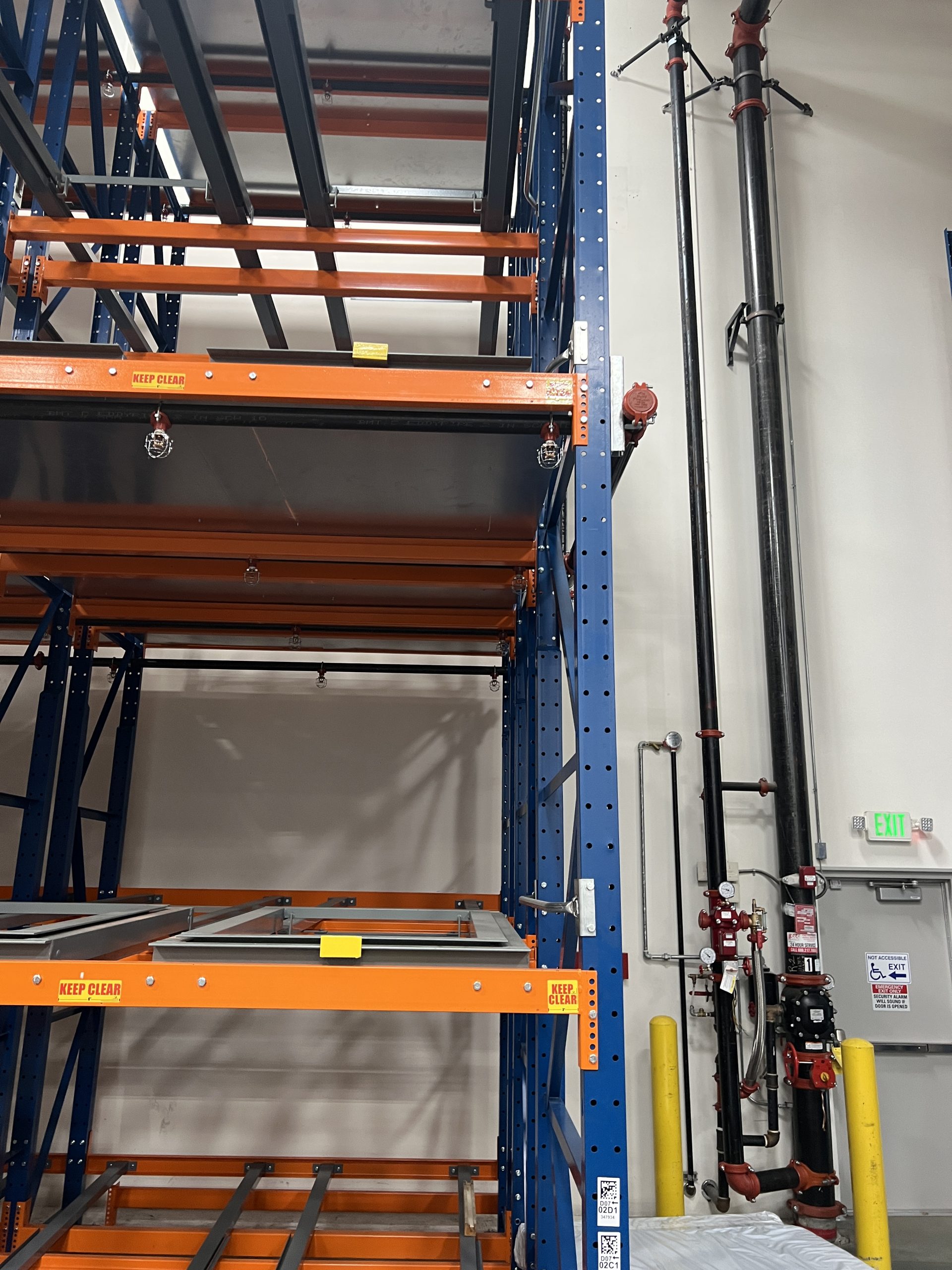
In-rack fire sprinkler heads and steel fire baffles installed at intermediate levels within a multi-tier pallet rack system.
In-Rack Fire Sprinkler Systems
In-rack sprinklers are mounted directly onto pallet rack uprights or horizontal members at intermediate storage levels, rather than relying solely on ceiling-mounted heads. When a fire ignites, the sprinkler heads closest to the heat source activate first, suppressing the fire before it spreads vertically through the rack.
The design of an in-rack sprinkler system depends on several factors, including the commodity class of the stored materials, the rack height and bay configuration, aisle widths, and local fire authority requirements. Commodity classification — defined by NFPA 13, the standard for installation of sprinkler systems — determines the flow rate, sprinkler spacing, and system pressure requirements.
WSH has worked alongside fire engineers and licensed sprinkler contractors on rack installations in facilities subject to California Fire Code and other jurisdictions with strict high-piled storage regulations. Our role is to design the rack system so it is structurally compatible with the sprinkler installation, coordinate with the fire protection contractor, and ensure the overall system meets permit requirements from inception through final inspection.
Fire Baffles: Heat Management Within the Rack
Fire baffles are steel sheet barriers installed within pallet rack systems to manage heat movement and improve sprinkler activation. They work by trapping rising heat within a localized zone, which causes nearby sprinkler heads to activate faster and more reliably than they would if heat were allowed to dissipate upward through open rack structure.
In addition to improving activation speed, fire baffles help contain fire spread by creating physical barriers within the rack. This limits the lateral and vertical movement of flames and burning product, reducing the potential loss of inventory in adjacent bays.
Fire baffles can be installed vertically between rack rows, horizontally between storage levels, or in combinations depending on commodity class and the fire protection plan. They are low-maintenance, durable, and can be retrofitted into existing rack systems when fire code requirements change or facilities undergo inspection.
Flue Keepers and Row Spacers: Maintaining Critical Clearances
Flue spaces are the open vertical channels maintained between rows of pallet rack and between palletized loads within rack bays. NFPA 13 and local fire codes require these clearances be maintained because they serve a critical function in fire suppression: they allow sprinkler water to flow downward through the rack structure and reach lower storage levels where a fire may originate.
When product encroaches on flue spaces — through improper loading, oversized pallets, or inventory that shifts over time — the effectiveness of in-rack sprinkler systems is significantly compromised. Water cannot reach lower levels if the flue channels are blocked.
Flue keepers and row spacers are physical devices installed within the rack system to enforce and maintain required flue clearances. Row spacers attach between back-to-back rack rows and maintain the required longitudinal flue space. Flue keepers are installed at the rack beam level to prevent pallets from being pushed too far back into the bay, preserving the transverse flue space between stored loads.
These components are inexpensive relative to the cost of a fire event, and are a straightforward requirement in any pallet rack installation involving in-rack sprinkler systems.
Secondary Containment for Flammable and Hazardous Liquids
Facilities storing flammable liquids, lubricants, cooking oils, chemicals, or other regulated materials face an additional requirement beyond fire suppression: secondary containment. OSHA and EPA regulations require that storage areas for certain liquid commodities include containment systems capable of capturing spills before they spread across the facility floor, reach floor drains, or create a fire or environmental hazard.
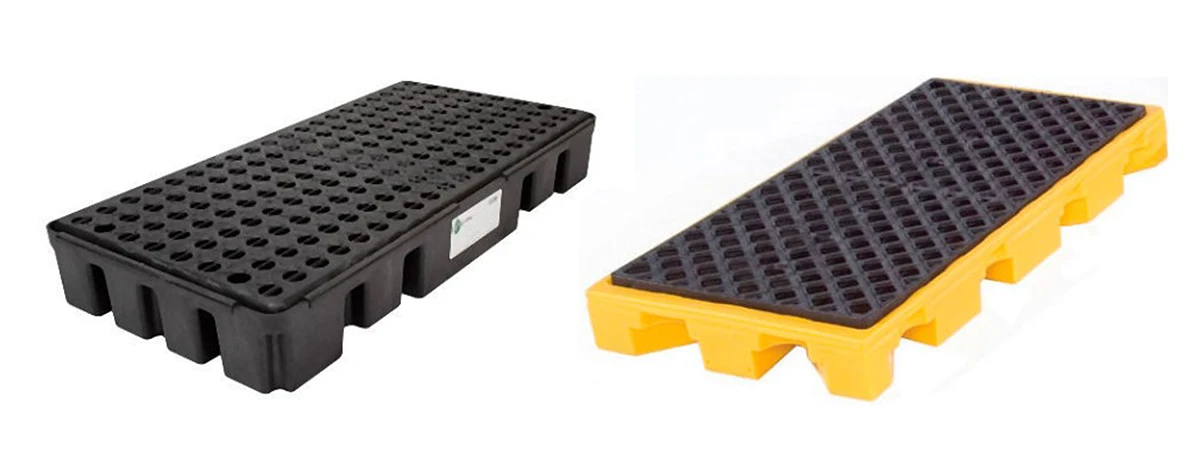
Spill containment pallets capture leaks and liquid runoff beneath pallet rack storage, preventing floor contamination and helping facilities meet OSHA and EPA secondary containment requirements.
In a pallet rack environment, secondary containment typically takes the form of containment pallets, drip trays, or sump systems positioned beneath rack bays storing regulated materials. These systems capture leakage from damaged containers, slow releases, or pallet failures and hold the liquid within a defined area where it can be safely managed.
Properly specified secondary containment is sized for the volume of liquid stored in a given rack section. It must also be chemically compatible with the specific materials being stored — a containment system rated for oil may not be appropriate for corrosive chemicals. WSH incorporates secondary containment planning into the overall rack design process to ensure compliance before the system is installed.
Building Code, NFPA, and Local Fire Authority Requirements
Pallet rack fire protection requirements are governed by a combination of national standards and local jurisdiction requirements that can vary significantly by location. NFPA 13 provides the national baseline for sprinkler system design. NFPA 30 covers flammable and combustible liquid storage. Many municipalities, particularly in California, have adopted high-piled combustible storage ordinances that impose additional requirements beyond national standards.
Before any pallet rack system storing regulated materials is designed, the applicable fire code requirements for the specific jurisdiction must be identified and incorporated into the system design. This includes working with the local fire authority having jurisdiction (AHJ) to understand permit requirements, inspection protocols, and any facility-specific conditions.
Insurance carriers also impose their own requirements, which may exceed code minimums. Facilities that do not meet carrier requirements risk coverage gaps in the event of a fire loss, regardless of whether local code is satisfied.
What to Expect From a Code-Compliant Pallet Rack Fire Protection Installation
A properly executed pallet rack fire protection project involves coordination across multiple disciplines. The rack system design must account for sprinkler head placement, flue space requirements, fire baffle positioning, and secondary containment zones before any materials are ordered. The rack installer, fire sprinkler contractor, and local fire authority must all be aligned on the design before installation begins.
WSH manages this coordination process as part of our full-service project delivery. We work directly with fire protection engineers and licensed sprinkler contractors, handle permit applications, and serve as a single point of contact throughout the project. Our team has completed in-rack fire protection installations in food distribution, cold storage, industrial manufacturing, and high-piled storage environments across Colorado and the broader Rocky Mountain region.
Design Your Pallet Rack Fire Protection System With WSH
Getting pallet rack fire protection right requires experience with both the storage system and the regulatory environment. WSH has the expertise to design and install pallet rack systems that integrate fire sprinklers, baffles, flue keepers, row spacers, and secondary containment into a code-compliant, permit-ready solution.
If your facility stores flammable or hazardous materials in pallet rack, or if you are planning a new installation that will require fire protection, our team can evaluate your requirements and develop a system that meets local code, satisfies your insurance carrier, and protects your people and your inventory.
Request a Proposal to start the conversation with our team.