
Industrial lockers are available in a wide range of materials, configurations, sizes, and security options. The differences between them matter significantly depending on where they will be installed and who will be using them. Selecting the wrong locker for an environment leads to durability problems, security gaps, and user complaints that are expensive to correct after installation.
This guide covers the key specification decisions involved in purchasing lockers for warehouses, schools, gyms, locker rooms, tenant storage, and other facility applications, so you can evaluate options with confidence before committing to a system.
Understanding Locker Tiers and Columns
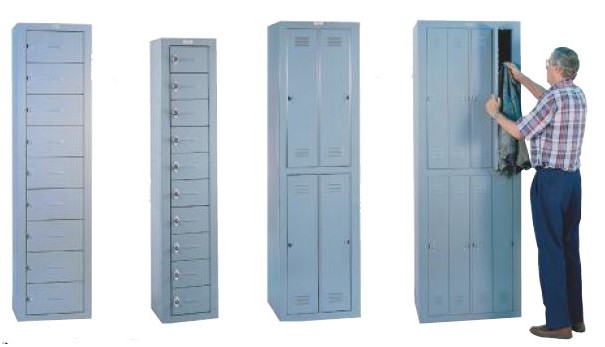
Before evaluating materials or features, it helps to understand the basic dimensional terminology used to describe locker configurations.
Tiers refer to the number of individual locker compartments stacked vertically within a single column. A single-tier locker occupies the full height of the column (typically 60 to 72 inches) and provides the most interior space per user. This is appropriate for applications where users need to hang full-length coats or uniforms, or store larger items like athletic equipment. A double-tier locker divides that height into two compartments, each approximately 30 to 36 inches tall. Triple-tier configurations provide three shorter compartments per column, typically 12 to 18 inches each, which work well for storing smaller personal items like bags, laptops, or valuables.
Columns refer to the number of vertical locker units arranged side by side in a single bank. A single-column unit is one locker wide. Multi-column banks combine multiple columns into a single freestanding or wall-mounted assembly, which simplifies installation and reduces the number of anchor points required.
Knowing the number of tiers and columns you need, combined with the available wall space in the installation area, determines how many total locker spaces a given footprint can accommodate.
Locker Materials: Steel, Plastic, and Wood
The three primary locker materials are steel, plastic, and wood or wood laminate. Each has distinct performance characteristics suited to different environments.
Steel Lockers
Steel is the most common material for industrial, warehouse, school, and facility lockers. It offers the best combination of strength, security, and cost-effectiveness across a wide range of applications. Steel gauge (the thickness of the metal) varies by product line and directly affects durability. Lower gauge numbers indicate thicker, stronger steel. 16-gauge steel is significantly more robust than 24-gauge and is appropriate for high-traffic industrial environments, gyms, and applications where lockers may experience regular physical impact. Lighter gauge steel is adequate for lower-demand applications like office break rooms or administrative areas.
Steel lockers are available in welded or knocked-down (KD) construction. Welded lockers are assembled at the factory and arrive ready to install, which is faster on-site but increases freight costs due to size. KD lockers ship flat and are assembled on-site, which reduces shipping costs for large orders but requires installation time.
Plastic Lockers
High-density polyethylene (HDPE) plastic lockers are the preferred choice for environments with high moisture exposure like pool areas, aquatic facilities, beaches, outdoor installations, and any application where corrosion resistance is a primary requirement. Plastic lockers will not rust, and they are highly resistant to graffiti, chemicals, and physical damage from daily use.
HDPE lockers are also well suited to food processing environments where lockers may be exposed to wash-down procedures or sanitizing chemicals. The limitation of plastic lockers is that they do not provide the same level of physical security as heavy-gauge steel. Plastic lockers are not appropriate for storing high-value items in environments where forced entry is a concern.
Wood and Laminate Lockers
Wood and wood laminate lockers are chosen primarily for aesthetic reasons and are most commonly found in upscale environments such as country clubs, spas, fitness centers, and corporate office facilities where the locker room is a visible part of the facility’s brand presentation. They offer good durability for moderate-use applications but are not appropriate for heavy industrial environments or locations with significant moisture exposure.
Ventilation Options
Proper ventilation in lockers prevents odor buildup and is particularly important in athletic, industrial, and locker room environments where clothing and equipment may be stored for extended periods.
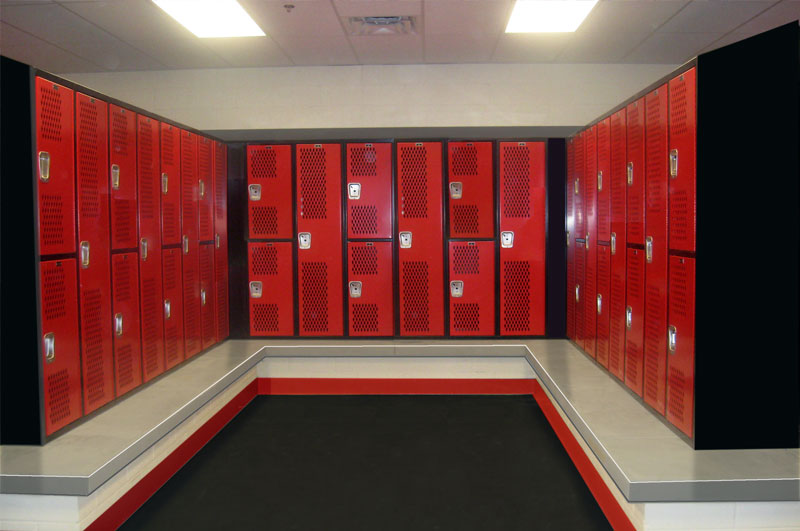
Ventilated school locker room lockers
Standard steel lockers typically feature slotted louvers on the door face and sometimes on the sides and back of the locker body. Louvers allow passive airflow while maintaining visual privacy and are appropriate for most employee, school, and tenant storage applications.
Perforated or mesh panel doors provide greater airflow and are a common choice for athletic lockers, ski lockers, and any application where wet gear or footwear needs to dry while stored. The tradeoff is that the contents are partially visible through the perforations, which reduces privacy.
For applications where privacy and ventilation are both priorities, combination configurations with louvered body panels and solid doors are available.
Locking Options and Access Control
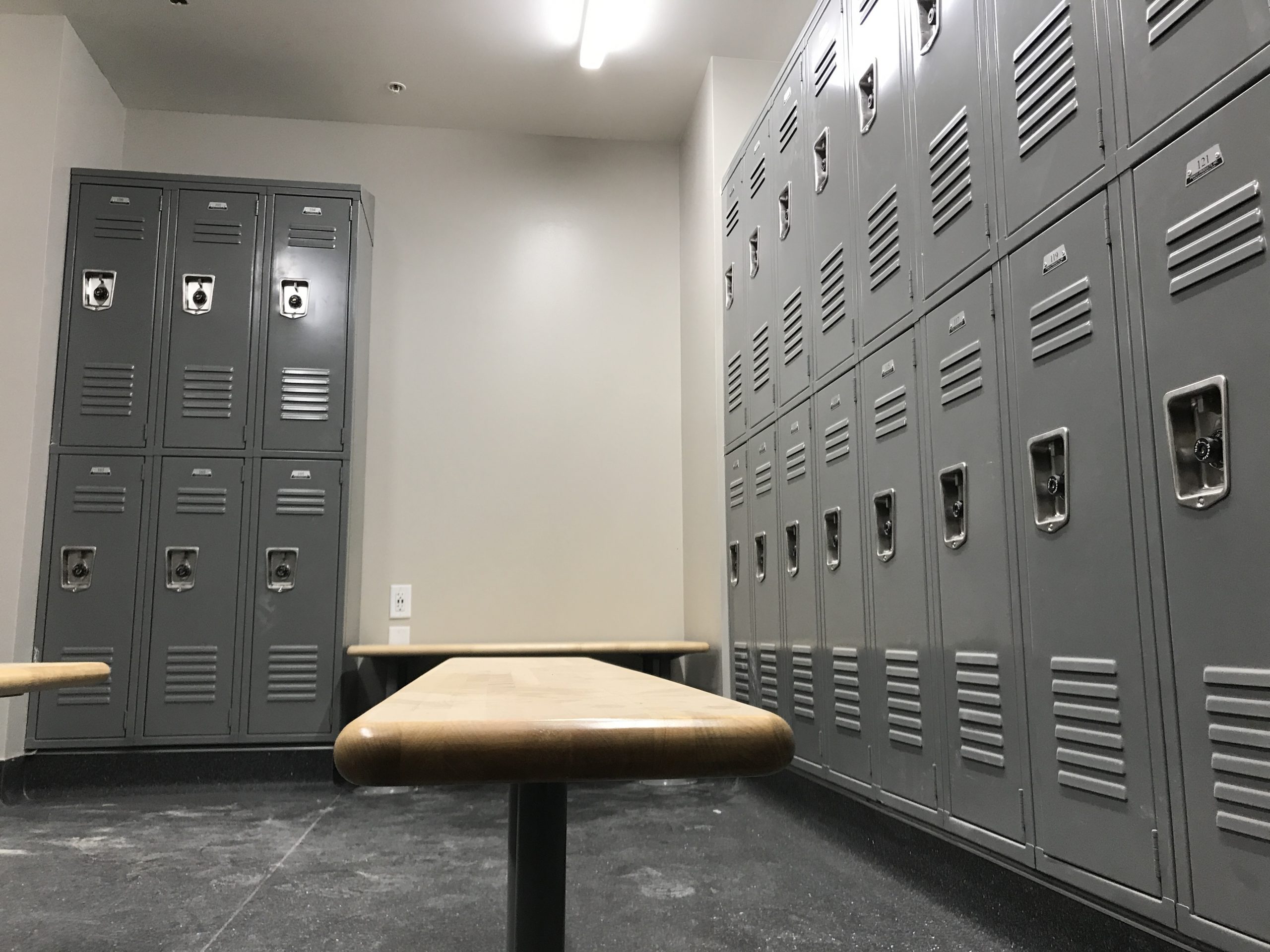 The range of locking options available for industrial lockers has expanded significantly in recent years, and the right choice depends on the security requirements of the application and the operational preferences of the facility.
Built-in key locks are the traditional standard. Each locker has a unique key or a master key system allows facility management to access any locker. This is a reliable and cost-effective option for most applications but requires key management procedures and creates costs when keys are lost.
Padlock hasp configurations do not include a built-in lock. Users supply their own padlock, which is threaded through a hasp on the door. This is common in gym and recreation environments where users want to use their own lock, and it eliminates the key management burden for facility operators.
Combination locks, either mechanical dial or push-button keypad, eliminate keys entirely and allow users to set their own combination. Electronic keypad locks with programmable codes provide the same benefit with additional security features including audit trails and master override codes.
Proximity card and fob access systems integrate lockers into a facility’s existing access control infrastructure, allowing the same card used to enter the building to open an assigned locker. This is increasingly common in corporate and government facilities where integrated access management is a priority.
Specialized Locker Types for Specific Applications
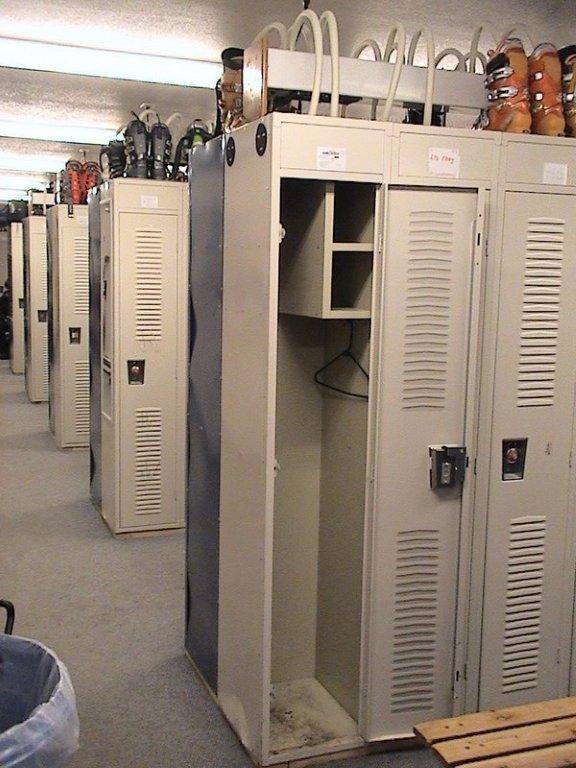
Ski locker with boot dryer
Beyond standard employee and personal storage lockers, several specialized configurations address specific facility needs.
Weapon storage lockers are built to heavy-gauge steel specifications with enhanced locking systems designed for law enforcement, military, and security applications. They are typically specified to meet TA-50 military storage standards or equivalent requirements.
Evidence storage lockers for law enforcement use require tamper-evident features, secure chain-of-custody documentation capability, and construction that meets evidentiary handling standards.
Tenant storage lockers for multifamily residential properties and self-storage facilities are often wire mesh rather than solid panel construction, which allows visual inspection of contents without opening the unit while still providing secure, lockable storage. WSH installs WireCrafters wire mesh tenant storage systems as an alternative to traditional solid lockers for these applications.
Ski and snowboard lockers are sized to accommodate ski equipment and boots and are commonly installed in resort, mountain town, and recreational facilities throughout Colorado. They are typically specified in ventilated configurations to allow gear to dry between uses.
Layout Planning and AutoCAD Design
Locker systems that look straightforward on paper often present challenges when translated to a real installation space — wall irregularities, existing electrical panels, HVAC equipment, floor drains, and code-required clearances all affect how lockers can be arranged. A layout plan developed in AutoCAD before the order is placed eliminates surprises during installation and ensures the purchased system fits the actual space.
WSH uses AutoCAD design software to produce locker layout drawings for every project. We field-measure the installation space, produce a layout showing locker placement, door swing clearances, and anchor locations, and provide that drawing for client review before finalizing the order. This step is provided at no charge as part of the quoting process.
Get Expert Guidance on the Right Locker System for Your Facility
WSH works with leading locker manufacturers including Penco, Republic Storage Products, Bradley Corporation, Hadrian, and Ideal Products to specify and supply locker systems for warehouses, schools, gyms, government facilities, multifamily properties, and specialized applications throughout Colorado, Eastern Wyoming, and Western Nebraska.
Our team will field-measure your space at no charge, produce an AutoCAD layout so you can see exactly how your lockers will fit before committing to an order, and provide a proposal that fits your application and budget. There is no obligation to proceed.
Explore Industrial Locker Options or Request a Proposal to get started.