When a warehouse or industrial facility runs out of floor space, the instinct is often to lease additional space or plan a building expansion. Both options are expensive, slow, and disruptive. A third option, one that is faster, less costly, and does not require any change to the building’s footprint, is a steel mezzanine system.
Industrial mezzanines create one or more additional levels of usable floor space within an existing structure by building upward rather than outward. A facility that genuinely needs more square footage can often meet that need entirely through vertical expansion at a fraction of the cost of a new lease or building addition.
What Is an Industrial Storage Mezzanine?
An industrial mezzanine is a structural steel platform installed within an existing facility to create an intermediate level between the floor and ceiling. Unlike permanent construction, mezzanines are pre-engineered, modular systems that are designed, fabricated, and installed without structural modification to the building itself. They are freestanding or rack-supported structures that transfer their loads to the floor through column footings, not to the building walls or roof.
Because they are modular, mezzanines can be reconfigured, expanded, or relocated if operational needs change, a flexibility that permanent construction cannot offer. They are engineered to meet IBC, OSHA, and local building code requirements and are subject to permitting in most jurisdictions.
When Does a Mezzanine Make Sense?
A mezzanine is worth evaluating any time a facility faces one of the following scenarios:
Storage or operational demand has grown beyond the current floor plan and available floor space is exhausted. The cost of leasing or purchasing additional space is significant relative to the investment in a mezzanine. Ceiling height in the facility is sufficient to accommodate a mezzanine at a functional working height, generally a minimum of 14 to 16 feet of clear height, though this varies by application. The operations that need additional space are compatible with vertical separation. This includes storage, office space, break areas, light manufacturing, or processing rather than heavy forklift traffic that must remain at grade.
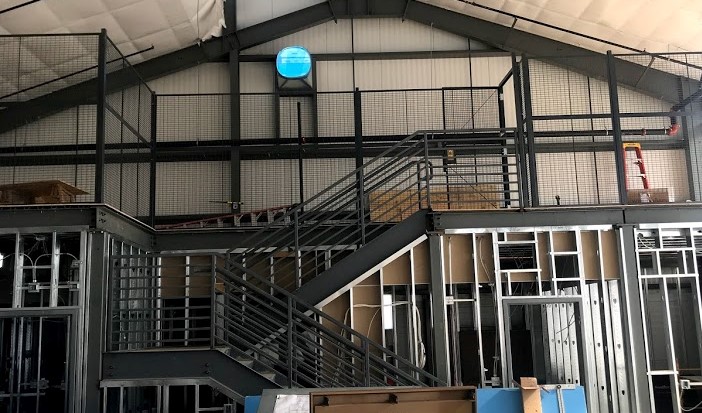
Mezzanine solutions for doubling or tripling your existing storage space
Mezzanines are not the right solution for every space constraint. In facilities with low ceiling heights, heavy floor loading requirements throughout the upper level, or operations that require full ground-level access at all times, other approaches may be more appropriate. WSH evaluates each facility’s specific conditions before recommending a mezzanine as the solution.
Types of Industrial Mezzanines
The right mezzanine configuration depends on how the upper level will be used, how the structure will be supported, and what the facility’s existing infrastructure looks like.
Freestanding Mezzanines
Freestanding mezzanines are supported by structural steel columns anchored to the floor. They are independent of the building structure and can be positioned anywhere within the facility where floor loading capacity supports the column footings. This is the most versatile configuration and the most common for general storage, office, and work platform applications. Column spacing can be customized to maintain clear spans below the platform for forklift access, shelving, or other ground-level operations.
Rack-Supported Mezzanines
Rack-supported mezzanines use pallet rack uprights as the structural support for the elevated platform. This approach combines storage at rack level with a usable work surface or storage platform on top. It is an efficient configuration for parts distribution environments where dense rack storage below and order processing or secondary storage above can be integrated into a single system.
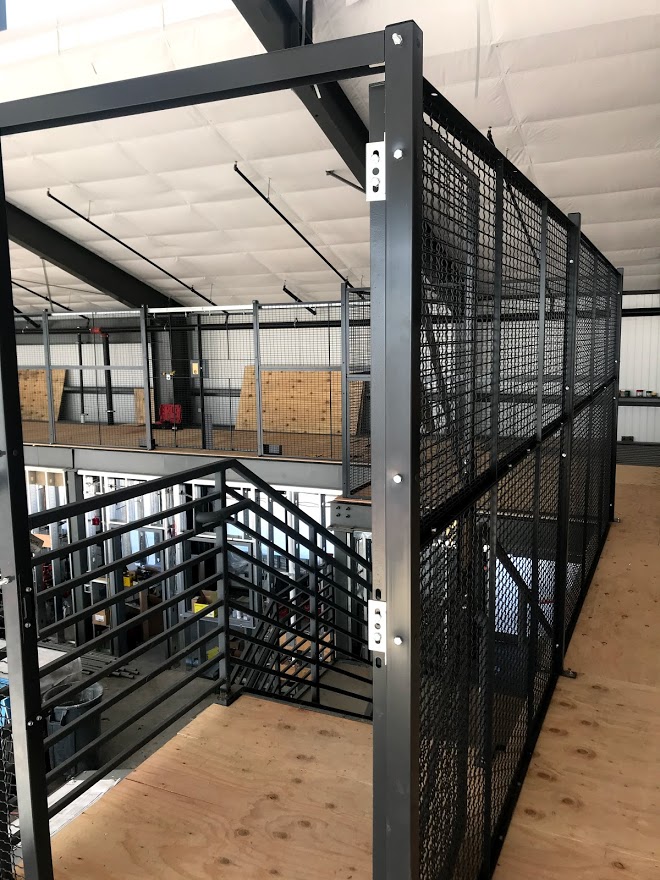
Catwalk and Multi-Level Mezzanines
Catwalk-style mezzanines provide elevated access to shelving or rack systems that would otherwise require ladders or order pickers to reach upper storage levels. Rather than a full floor platform, catwalks provide a walking surface at elevated height with access to storage on both sides. Multi-level mezzanines stack two or more platforms, tripling or further multiplying usable floor space in facilities with sufficient ceiling height.
Common Applications for Warehouse Mezzanines
The applications for industrial mezzanines span a wide range of industries and operational needs. The most common uses WSH encounters across Colorado and the Rocky Mountain region include:
Overflow and bulk storage above active picking or production areas. Administrative offices and supervisory workstations positioned above the warehouse floor with visibility into operations below. Employee break rooms, locker rooms, and lunchrooms elevated above the production or storage floor. Parts storage and kitting operations in automotive, manufacturing, and distribution environments. Archive and records storage in facilities that need to maintain physical documents while minimizing the use of active floor space. Equipment and tool storage in facilities with limited secure storage options at grade.
What Mezzanine Installation Involves
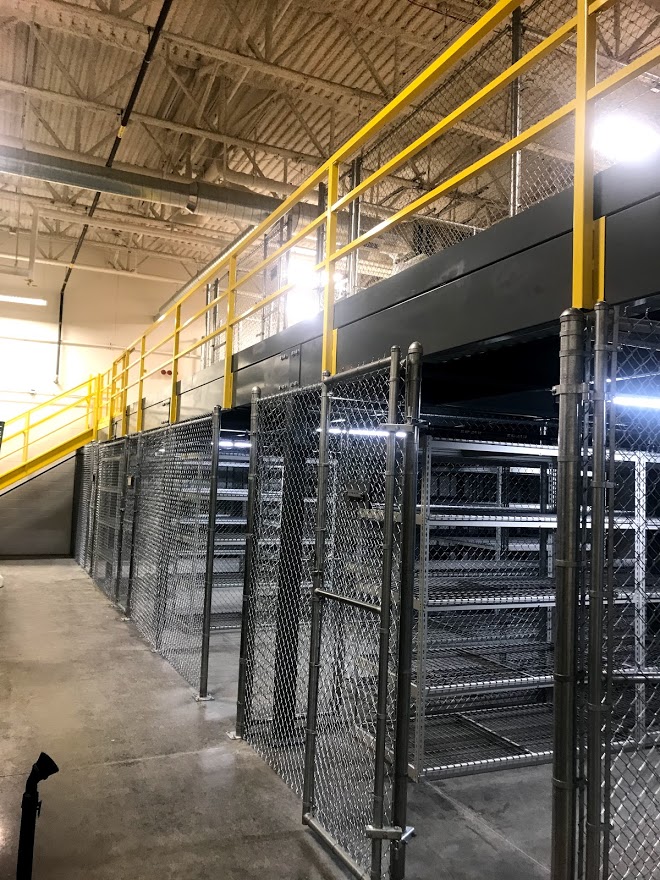
A mezzanine installation is a more involved process than standard rack or shelving work. It requires engineering, permitting, and coordination with the local building authority having jurisdiction, particularly for structures above a certain size or load rating threshold.
The installation process with WSH follows a consistent sequence. We begin with an on-site visit to measure the facility, assess floor loading capacity, evaluate ceiling height and clearances, and understand how the upper level will be used. From that assessment, our team produces AutoCAD drawings and structural engineering calculations that form the basis for the permit application.
Once permits are approved, fabrication and delivery are scheduled. Installation is typically completed within a few days for most mezzanine sizes, with minimal disruption to ground-level operations. WSH manages the entire process from initial design through final inspection, serving as a single point of contact throughout.
Mezzanines Combined With Modular Offices
One of the most practical applications of a warehouse mezzanine is combining the elevated platform with a modular office structure. Rather than dedicating prime ground-level floor space to administrative functions, a modular office unit can be installed on top of the mezzanine deck, creating enclosed office space, a conference room, or a break area entirely above the warehouse floor.
This approach preserves all ground-level space for operational use while still providing the enclosed, climate-controlled environment that office functions require. WSH installs modular office systems from manufacturers including MiTek, 3D Storage Systems, and Panel Built that are specifically designed for mezzanine deck installation.
See a Mezzanine Installation in Action
For a real-world example of how a mezzanine system can transform a facility’s capacity, the Adams County mezzanine and storage platform installation case study shows how WSH delivered a 30-foot by 60-foot storage platform combined with Rivet-Span shelving to double records storage capacity within an existing footprint.
Add Usable Space to Your Facility With a Steel Mezzanine
Western Storage and Handling designs and installs steel mezzanine systems for warehouses, distribution centers, manufacturing facilities, and industrial operations throughout Colorado, Eastern Wyoming, and Western Nebraska. Our team handles everything from engineering and permitting to installation and final inspection.
Request a Proposal to explore whether a mezzanine is the right solution for your facility.